On the matter of Enamel

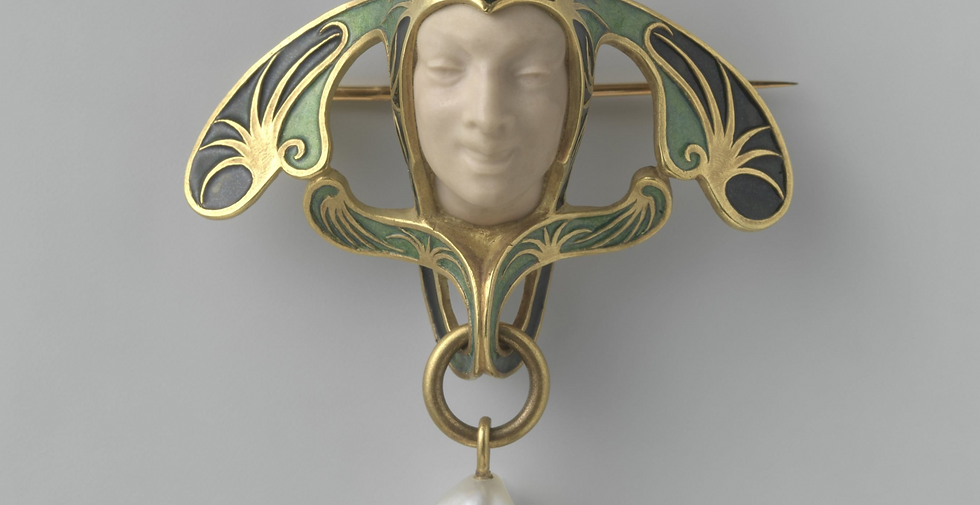
In 1900, René Lalique presented a series of enamel ornaments at the Paris Exposition that departed from many of the conventions of fine jewellery.
At the time, precious stones remained the clearest expression of value. Diamonds, rubies and sapphires dominated the conversation. Lalique took a different approach. Enamel occupied the centre of his work, not as an embellishment but as a material capable of carrying colour, light and form with remarkable subtlety.
Among the techniques he employed was plique à jour, in which translucent enamel is suspended within delicate metal cells without a backing. Light passes through the surface in much the same way as stained glass, revealing shifts in tone and depth that are difficult to achieve with faceted stones alone. The process demanded exceptional precision and remained one of the most challenging forms of enamelling.
More than a century later, many of Lalique's enamel works are held in museum collections, including the Gulbenkian Museum and the Rijksmuseum. They are recognised not for the rarity of their materials, but for the imagination and craftsmanship they represent.
That history continues to inform the way we think about jewellery.
Every Annasach piece begins with a muse. Maaya creates opportunities rather than waiting for them. Serene carries herself with quiet assurance, unaffected by the need to perform. Amara approaches her work with discipline and curiosity, placing substance ahead of appearances. Their stories shape the collections more than any trend or season.

Brass and enamel have occupied a place in jewellery for centuries. Their appeal has never rested solely on practicality, but on the qualities they bring to the maker's hand. Enamel offers a richness of colour that shifts with the light.
Brass lends warmth, softness and the freedom to sculpt intricate forms. Together they invite a different way of thinking about adornment, one rooted in craft as much as material.
Annasach is the Gaelic word for unconventional. It reflects an approach that values design, workmanship and individuality above convention, and a tradition that has existed far longer than the brand itself.


Comments